


The slate-gray metal desk matches the color of low clouds outside the window. Thirty-four year old Francis Rogallo sits with his long legs tucked up under the desk, the cuffs of his slacks riding just above black socks. His thin black tie is pulled slightly loose, and the sleeves of his white shirt are rolled to mid forearm. His long frame is hunched over a small journal and he’s writing furiously. It’s June 20, 1946, and Rog’s stranded in a hotel room in Cleveland. He’s waiting for the weather to clear enough to allow his friend fly him in a small plane to Lock Haven, PA, the home of Piper Aircraft. As he waits for the pilot’s phone call, he takes advantage of the opportunity to record his thoughts, having just spent the last three days at the Institute for Aeronautical Sciences Light Aircraft Meeting.
The flimsy desk jiggles slightly as his pencil flies across the pages of his little notebook. The script grows fat occasionally as the lead dulls, then suddenly thin again when he turns the pencil to use a sharper edge, or stops completely to shave a new point. Spanning over 14 pages in his journal, the document is the first articulation of Rog’s desire to urge the NACA to pursue aeronautical research that would benefit light aircraft, ultimately toward the development of “the family car of the future:” an aircraft that would be simple, affordable, and easy to fly. Rog’s enthusiasm, energy, and earnestness fairly drip off the page. As he writes more quickly, his handwriting suffers, but it’s all legible, and it’s all on point.
The journal entry that June morning is simply titled “Plans,” and the first paragraph reads, “Establish a ‘Light Aircraft Research Laboratory’ at Langley Field with the equipment considered obsolete or nearly so for military purposes.” What follows is a nearly 2000 word manifesto calling for the NACA to take seriously the future of light, private owner aircraft. By maintaining “very close contact and cooperation” with the light aircraft industry, this new lab would be committed to discovering “a light airplane configuration good enough to warrant true mass production.” By the time of this writing, Rog already had in his head an idea for such an aircraft, one he had recently referred to as a “radical design that might one day warrant production on the scale of the automobile.”
This is a pivotal time. It is no exaggeration to claim that Rog’s future, the future of the NACA, and even the future of light aircraft aviation hangs in the balance. Only the day before he’d turned down a job to manage a high speed fighter wing project at Northrop, based on his conviction that the NACA might eventually be the best place for light aircraft research to happen, even though the odds at present seemed long.
He was facing an uphill battle at best. The complex institutional changes at the NACA after World War II informed the almost desperate tone of his writing, but his desire to pursue the development of private owner type aircraft, “the family car of the future,” was genuine.
What follows is a story of perseverance, persistence, and eventually a kind of vindication, though in a way that only Rog had even the slightest inkling. Nothing would ever come of his plan for a ‘Light Aircraft Research Laboratory,’ but his “radical idea” would one day affect the lives of millions.
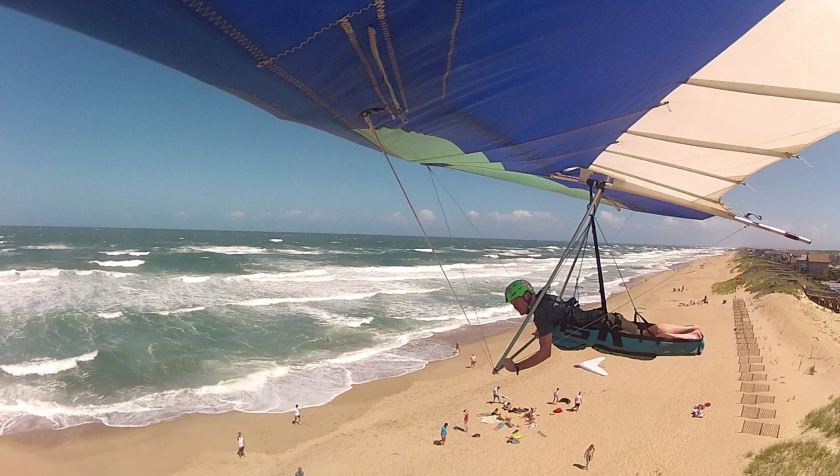 You can’t see the air–you can only see what it does. You can see it move sand, create waves, even lift leaves from the ground occasionally. But you can feel it. Hold your hand out the window of your car and feel the force of textured air at 50 miles an hour. Stand on a mountain top in winter and feel the air flow by, milk-thick and smooth.
 rogismycopilot